
Seamless Gutter Installation on Long Island: What You Need to Know
By Danny Marchetti, Founder & Lead Installer at LI Gutter Service.
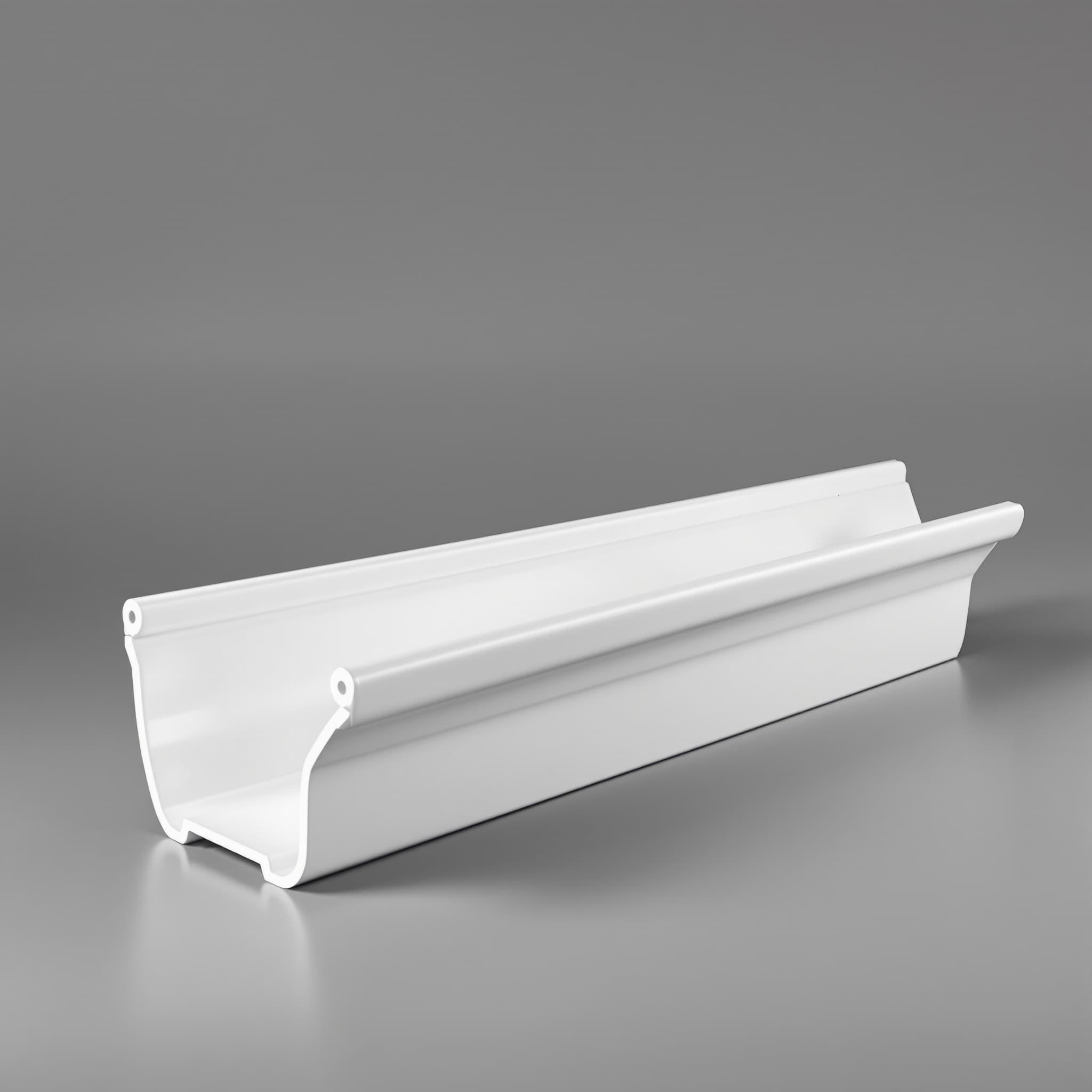
Seamless gutter installation on Long Island is one of the most high-value home improvement decisions a Nassau or Suffolk homeowner can make — and one of the most misunderstood. The word "seamless" gets applied to everything from factory-cut sectional gutters to genuine on-site extruded runs, and the difference in performance over 30 years is substantial. This guide covers what seamless actually means, why it matters on Long Island specifically, and what to expect from the installation process.
Long Island's combination of heavy leaf fall from mature hardwoods and maples, coastal humidity that accelerates corrosion, freeze-thaw cycles that stress seams, and older housing stock with fascia rot issues makes gutter installation here more demanding than the national average. Getting the spec right the first time — profile size, material gauge, hanger type and spacing, downspout sizing — determines whether you're doing this job again in 8 years or in 35.
Seamless vs Sectional: What the Difference Actually Means
Sectional gutters — what big-box stores sell in 10-foot sticks — are pre-cut pieces joined by connectors every 10 feet. Each joint is a potential leak point. The connectors require caulk or butyl tape that fails over time, and the joints trap debris. Most sectional gutters installed on Long Island homes in the 1990s and early 2000s are leaking at every connector by now.
Seamless gutters are extruded on-site from a continuous coil using a portable roll-forming machine. The machine rides on your driveway; the gutter is formed to the exact length of each run. The only seams in a true seamless installation are at inside and outside corners. Corner seams get double-butyl sealed and can last 20–25 years without re-sealing. Mid-run seams — which don't exist — can't fail.
A crew that shows up with pre-cut sections calling them "seamless" is selling you sectional gutters. Ask to see the portable forming machine before any work begins. If there's no machine, the gutters are sectional regardless of what the quote says.
5-Inch vs 6-Inch K-Style: Why It Matters on Long Island
The most common gutter installed on Long Island homes is 5-inch K-style aluminum. For a typical 1,200–1,600 square foot ranch or Cape Cod with standard pitch and moderate tree cover, 5-inch handles normal rainfall without overflowing. But Long Island's combination of heavy summer storms (some nor'easters deliver 2+ inches per hour) and dense tree canopy in North Shore and mid-Suffolk communities means 5-inch gutters are frequently undersized for where they're installed.
6-inch K-style holds 40% more volume than 5-inch. On any home with: more than 30 linear feet of roof area per downspout, tree canopy within 20 feet of the roofline, a low-pitch roof that concentrates runoff quickly, or a history of gutter overflow during heavy rain — 6-inch is the right call. The upcharge is $2–$3 per linear foot and the coil is heavier, which typically means an upgrade to 3x4-inch downspouts from the standard 2x3 to maintain flow capacity.
Homes in Smithtown, Hauppauge, Commack, and the Huntington area — where mature oak, maple, and locust trees are the norm — see the heaviest leaf loads on Long Island. On these homes, the combination of 6-inch gutters, 3x4 downspouts, and stainless micromesh guards is the system that holds up. The same homeowner who calls us back in 3 years with overflow problems usually had 5-inch gutters and no guards under 80-foot oaks.
Copper Gutters for Historic North Shore Homes
The North Shore of Long Island — Cold Spring Harbor, Oyster Bay, Sea Cliff, Port Washington, Manhasset, Kings Point — has a significant inventory of pre-1940 Tudor, Colonial Revival, and Craftsman homes where aluminum gutters look categorically wrong. For these properties, 16-oz cold-rolled copper K-style or half-round copper is the appropriate material.
Copper gutter installation runs $28–$38 per linear foot for K-style and $35–$45 per linear foot for half-round. Every seam is hand-soldered rather than mechanically sealed, which means the seam integrity is higher than any caulked or butyl-sealed aluminum joint. Copper patinas to a verdigris green over 5–8 years and is considered architecturally desirable on historic properties — it's also the reason copper gutters on pre-war homes still function after 60+ years without replacement.
If your home is a post-1970 colonial or ranch, copper gutters are a premium aesthetic choice, not a functional necessity. The 3-4x cost premium over aluminum makes sense for historic properties where architectural authenticity matters for resale and pride of ownership — it does not make sense for a 1975 colonial in Levittown.
Hidden Hanger Spacing and Why It Determines Longevity
Gutter hangers are the anchoring system that holds the gutter to the fascia. The older spike-and-ferrule system — a spike driven through the front of the gutter into the fascia board — is what failed on most Long Island gutters installed before 2000. The spike wallows out, the ferrule deforms, and the gutter sags over 10–15 years. We still see spike-and-ferrule on homes where the original install was done in the 1980s.
Hidden hangers (also called inside hangers or T-bar hangers) clip inside the gutter and fasten to the fascia with a screw, not a nail. The screw can't wallow out the way a spike can. Proper spacing is every 24 inches — some budget installers go 36 inches, which is technically within tolerances but fails faster under ice load and when debris weight accumulates. On a 180-linear-foot installation, the difference between 24-inch and 36-inch spacing is about 30 additional hanger screws — maybe $80 in material. That $80 is the difference between gutters that hold their pitch for 30 years and gutters that start sagging in 12.
Fascia Condition Assessment: The Step Most Installers Skip
Fascia boards are the horizontal boards running along the eave that gutters attach to. When gutters fail — typically from poor pitch, leaking seams, or overflowing — water saturates the fascia. Rotten fascia cannot hold hidden hangers; the screw turns in soft wood and the gutter comes loose. Installing new gutters on rotten fascia is the #1 cause of premature gutter failure we see on Long Island.
Before any gutter installation, the fascia should be probed with a screwdriver at every bay. Soft spots, paint lifting from the face, and visible darkening at the gutter line are all signs of wood rot. Fascia repair or replacement runs $180–$450 per section (4-16 linear feet) and should be treated as a necessary part of the gutter installation, not an add-on upsell. Any installer who doesn't mention fascia condition during the site visit is either not looking or hoping you don't ask.
Nassau vs Suffolk Gutter Codes and Permit Requirements
Gutter installation on Long Island generally does not require a building permit for like-for-like replacement — removing existing gutters and installing new ones of the same footprint. Permit requirements typically apply when adding gutters to a structure that never had them, when gutter work is part of a larger roofing or addition project with a permit, or when underground drain work is added (downspout tie-ins to buried drainage systems, drywell installation, or connection to municipal storm drain in some Nassau towns).
In Nassau County, the Town of Hempstead and Town of Oyster Bay have specific rules about where downspouts can discharge. Discharging onto impervious surfaces that drain to the street is generally permitted; discharging into a neighbor's yard is not. Underground drywell installation typically requires a permit and setback compliance from property lines and septic systems. For gutter-only installation, no permit is required in either Nassau or Suffolk — but confirm with your installer that the scope doesn't inadvertently trigger permit requirements.
Free quote in one visit
Ready for a firm number on your home?
Pick up the phone or send us the details. We'll respond same-day, Monday through Saturday.
- Free, no-pressure written estimate
- Licensed, insured, family-run since 2014
- Seamless gutters formed on your driveway
- Same crew from measure to cleanup